
When Good, Fast & Cheap all exist at the same time.
What if the standard Iron Triangle model of Good, Fast & Cheap is not entirely accurate? What if there were another way? After many years of lived experience, reading far too much philosophy and metaphysics, there are indeed options, options based around the idea of quality.
We have all seen the Good, Cheap & Fast sign. Businesses that provide services rather than products are often guilty of using this sign to quantify why they do what they do, and to hopefully iron out some of the ripples when it comes to setting expectations.
It has even received a cute little catch phrase, The Iron Triangle.
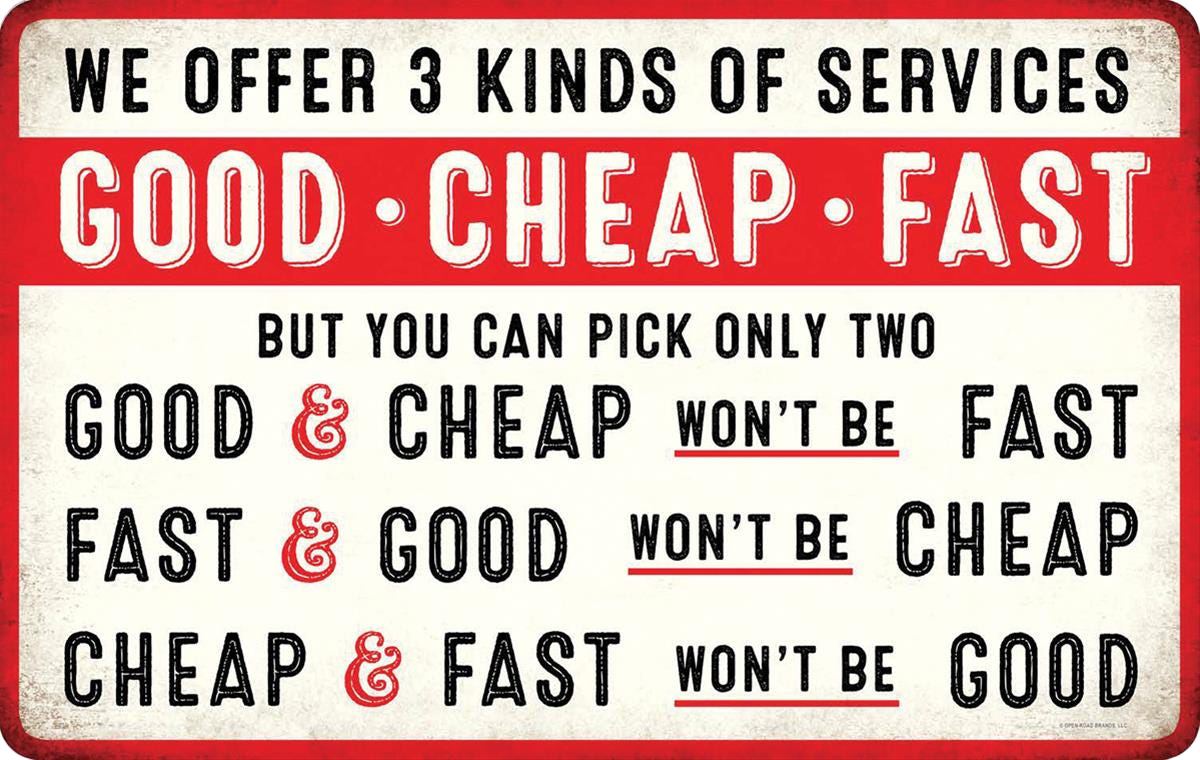
As defined by the wonders of the Google AI (more of that in another article coming soon), it is summerised as "The iron triangle is a project management rule stating that you can only pick two of three constraints: good (quality), fast (time), and cheap (cost)." The constraints are "iron" because changing one side of the triangle affects the others. For example, cutting the budget forces you to either reduce the scope (features / quality) or take more time. But what if there were another way?
The general concept is that you have three choices when making a product or delivering a service; make it quickly, cheaply or well. While it has long been believed that it isn’t possible to accomplish all three, some now think it is. Focusing on values and eliminating assumptions are key to developing a valuable product or service offering.
What is the iron triangle?
The concept of the iron triangle has evolved from three general assumptions:
- You can develop something quickly and of high quality, but it will be very costly.
- You can develop something quickly and cheaply, but it will be of low quality.
- You can develop something of high quality and low cost, but it will take a long time.
These rules seem hard and fast, however relying on them too heavily can actually negatively impact your project before you even start. You end up locked into an outdated model, and placing mental barriers around the development. The key is balancing all three factors with the integrity of the project from the outset, and this is ultimately done with clear communication and a solid, strong strategy to begin with.
It is essential to start out with firm deadlines or budgets, without this the project can easily spin out of control, leading to overspending and under-delivery, and a negative experience for you as the project owner and us as developers. That is why we have developed the process we have, mixed with a layer of transparency on our website so that you as our clients have access to the investment costs at every stage of the project before you even start. This "no surprises" approach removes a lot of the hiccups younger developers with less experience often encounter on the development path.

Let's take a moment to look at the traditional model of the Iron Triangle.
Does Good and Fast actually work?
When rushing the development process everyone inevitably cuts corners in favour of speed, regardless of the budget. You may very well get the project launched and be placed to receive feedback from your customers or users early on in the development, but you risk sacrificing the quality of the overall experience. In today's fickle world of immediacy the one chance you have to engage with your customers or users may end up in a poor overall experience, and you may never see them back again. Obviously this is very dangerous, and it can hurt the credibility of your project and create aspects that may be difficult to unwind further down the track. Even if you have the budget, the motivation and the strategy, speed is not always the answer. Thoughtfulness is. Strategy is. Planning is. Throwing more people at the project can actually slow it down. There are greater requirements for more meetings, more communication, more project management. More opportunity for things to derail and focus to drift from the core goals.
The all hands on deck approach to this method is expensive, however the focus on speed may end up costing even more in the end. More people means more communication to ensure everyone is on the same page, focused on the right tasks, and all working to the timeline of "NOW NOW NOW! Often rushed projects end up overlooking key components that a slower development exposes with proper research and deployment. Failing to see the big picture long term can mean that aspects of the project may have to be redone later on, and nobody likes spending money twice on the same component to get it done right. We have seen this so often in the past when "get it done" takes priority over "get it done right first time".
What about Good and Cheap? Are we that patient?
The danger with this approach is the speed at which our society works. What seems like a great idea today, might not have as much relevance in six months time. Over thinking the development can remove feedback from your users or customers from the process until very late in the development of the project. By this stage you are committed to a pathway, but ultimately that pathway might miss the mark, and everyone has moved on to a newer or better thing. You can minimise this risk with proper planning and strategy from the outset, with clear development goals at set intervals. You can also gather user feedback at earlier stages with a staged rollout. One thing to absolutely invest as much as will allow is research. You must know what you are doing, why you are doing it, and how you are going to achieve the results you expect. Shortcutting the research phase is a lost opportunity to carefully consider the project, timelines and objectives. The Research Phase is a primary focus for us as it presents the goal setting stage. It is also the time we learn about you and your business or project, we talk a lot, and discover what the real needs are.
By slowing down the project there is also the opportunity to break it down into manageable sections. The Research will identify a strategy for rollout and if done correctly you could even achieve pre sales before launch through an integrated teaser campaign. Everything is possible with a careful and considered approach. Speed is not always our friend, and our societies current obsession with immediacy may not be looked back on as the wisest of strategies long term.
Cheap and fast. Do we even need to quantify this?
Surprisingly we do. There are some out there that don't actually value GOOD. They see quality as a sliding spectrum, a "get what you pay for" situation. This concept is deeply embedded into our culture now with the abundance of imported cheap goods that are of a "use and lose" level of quality. Why spend $70 on a beautiful serving tray that you take to the dinner party and have to deal with at the end of the night getting back, when you can use a $2 one that you are happy to walk away from?
 Photo by Jon Tyson
Quality is the expectation and needs to be the primary objective.
The act of defining quality has been one of life's great quests. How do you put a value on it? It is the topic of several wonderful, life changing books on our library shelves. We all have the expectation that no one actually seeks out a low quality experience. No one wants to buy a low quality product, but unfortunately we have been conditioned by the framework of our society to have a sliding scale of quality now due to the reliance on cheap disposable goods. Even cars are now considered to be semi disposable, with expected lifespans of just 15 years due to the stability of some of the plastics used and battery packs for hybrid or electric drivetrains. The reliance on lean manufacturing and planned obsolescence result in products being built to function rather than being built to last a lifetime. This shortsighted approach ripples throughout all of our lives - we get conditioned to accept life at a lower level of quality. Is this something to aspire too as a society?
So we choose to reject this assumption. We are only focused on deliver a product of quality. Something you as owners, and us as providers, can be immensely proud of. Something with functional reliability and a thought process behind it that is both elegant and robust. But how does this fit into the Iron Triangle? It doesn't.
Breaking the Paradigm of the Iron Triangle
We are all about doing things better, and with more intensity and energy. Generating results utilising an amplification of power.
An established way of doing things is of no interest to us unless it proves itself and is valid.
If you spend enough time on this website, or dig a little deeper into our other projects, you will soon discover that we like to live our lives outside of most people's comfort zones. We are happy to try new things, go to new places, or take on tasks we have no experience in, because that is what makes our lives richer.
To gain experience you have to have the experience.
When it comes to developing projects we are no different.
The traditional constraints of the Iron Triangle do not apply if what you chase is high quality. You just need to approach the task with a slightly different mindset. The most important aspect to all of this we believe happens at the start.
The Research, Discovery and Planning Phase.
This is the chance to frame the project, and set goals and expectations. If you have ever built a shed with no plans (I have), you soon appreciate the benefit of having a plan. You can factor in all of your requirements before cutting the first board, AND you can also adapt the finished shed after the build has finished because you know exactly where all of the structural support lies, hidden away behind the walls. Need to add in shelves. Easy. Need to fit another window. Again easy. The plans are the key.
In order to achieve a high quality end result that is fast and at a reasonable cost you must make a concession somewhere along they way, and for us this is where scope enters the chat. Let's talk about timed roll outs and how they can be your strongest ally.
Adapting the scope of the project so that Quality is a primary focus at all stages means with the right strategy and planning you can not only set your goals but also start building a new audience, or bring on board your existing customer base by inviting them to participate, at a stage where their experience can be used to adjust your development. 
Photo by Santiago Perez
How do you eat an elephant?
One bite at a time.
Breaking your project up into smaller goals solves the Iron Triangle instantly. Maybe it means you commit to a longer build or development, or maybe it doesn't, because you get it right first time stage by stage. It also means that with a focus on quality and planning, each stage of the development is thoughtful and happens at the right time.
It is the same process as building a dream house.
Find your inspiration. Find your location. Learn the nature of your location, the sun angle, how the weather impacts the property, the obstacles on the boundaries, the compliance, the constraints of the materials you would love to use. Look at examples of the job done well. Walk through it if you can. And then set about working with the architect to develop the plan that will eventually become your refuge, your castle, the place you live your life. Plans locked in, now to bring in the builder, who more than likely is already connected to the architect via a mutual respect of professionality. The house then goes up in well planned stages, with each stage relying on the previous stage being completed to a high standard of quality. If the build is large, sections or wings of the project may take shape first to make it more manageable and more livable. Large enough and a section of the house is completed first to enable you to move in whilst the rest of the build continues around you. Sure, no one likes to live on a building site, but it is a better solution than living off site. When you are onsite you can talk with the builders, make quick decisions as situations arise, and adapt when necessary to a changing environment.
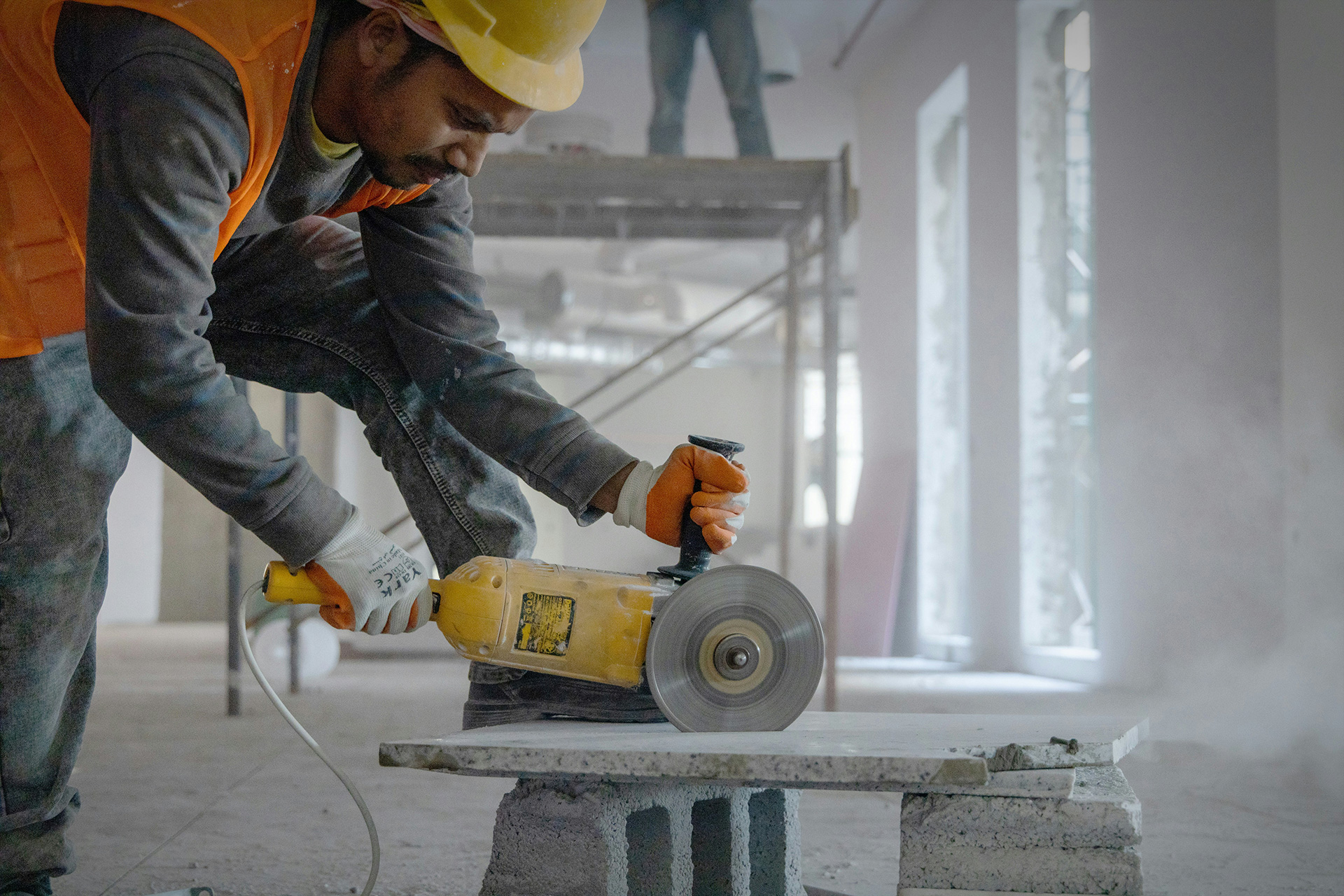
Every moment is an opportunity to learn from and be better.
One of the joys of working with large companies is the chance to see what ethics are employed to create a company culture. The Japanese are particularly good it if from a perspective of creating a culture that values a highly skilled workforce willing to give it their all and produce a top of the line product. Within the Japanese ethos is a concept called "Kaizen". Translated it basically means "the act of continuous, incremental improvement". This is at the heart of our processes here at Project Generator as we teach our next generation the paths we walk and why we do the things that we do.
Any project, no matter whether it is a website build or the development of a new brand, has plenty of opportunity to put Quality at the heart of the development process.
That is why part of our process includes a Research and Discovery Phase. We value knowing what the why is.
We believe in developing a deep sense of knowing you and your business. We are all about the long term. The Big Picture. The generation of a relationship that will outlast this one project and develop into one of trust, respect and synergy.
As a family business we are deep believers in commitment, integrity and authenticity.
We are looking to build relationships based on a quality experience for everyone involved.
To put it simply we are not interesting in working with dickheads and idiots. Likewise we are not interested in "smashing out a cheapie" or "cutting a deal". Our price is our price, and we have locked it into a place where you can see it for yourself before even committing to signing the Terms of Engagement document. Our price is also our price regardless of the size or scale of your business. Over the course of our involvement in the corporate world we have seen a sliding fee structure applied depending on "how much they can afford". We have never operated like this, actually quite loathe the practice, and as such when we decided to slide sideways and build out this aspect of our business it was a primary goal to have transparent menu pricing across all of our services offered.
We like to research every aspect of our lives before we commit to any pathway. Information is power, and the more informed we are the easier the decision ends up being. The unknowns are removed, and the questions are answered. We hope that we work with like minded individuals. People that have a deep commitment to their project, so much so that they are willing to invest a few moments in research before deciding what direction to take.
Right now, deep into this article, I am talking directly to you.
I absolutely realise that few people will read these long articles to the end.
Everyone thinks we are now collectively so time poor, but really this is all a trick of the mind. We have all of the control of time that we want. We just have to make choices as to where we invest our attention and for how long.
If you are in the position to develop a brand from scratch, or start a new project within your existing business, and you are reading this, congratulations, you have the time to carefully consider this. You have the time and space to be thoughtful. It doesn't matter if you are based in Nelson, Wellington or Marlborough, or elsewhere in the country of New Zealand, or even the world for that matter, there are ways we can connect and get the job done. We love to travel and love to meet new people. Please reach out to us and we will set you up with a log in for our website so that you get access to a deeper layer and all of our pricing. No commitments at all. We would love to meet you.
Follow Our Social Media
Get Fired Up!
Join our Newsletter. Its free and it is a great way to get hot tips, insights, tools and inspiration beamed directly into your email inbox.
More Articles


What we do
- Websites
- - The Generator
- - Transformer Pack
- Website Services
- - Domains
- - Hosting
- Marketing
- - Strategy & Planning
- - Search & Visibility
- - Social Media
- - Email & Newsletters
- - Print & Publishing
- - Content Creation
- - Data Integration
- Media Production
- - Image Library
- - Photography
- - Video & Film
- - Podcast
- - Content writing
- - Models / influencers